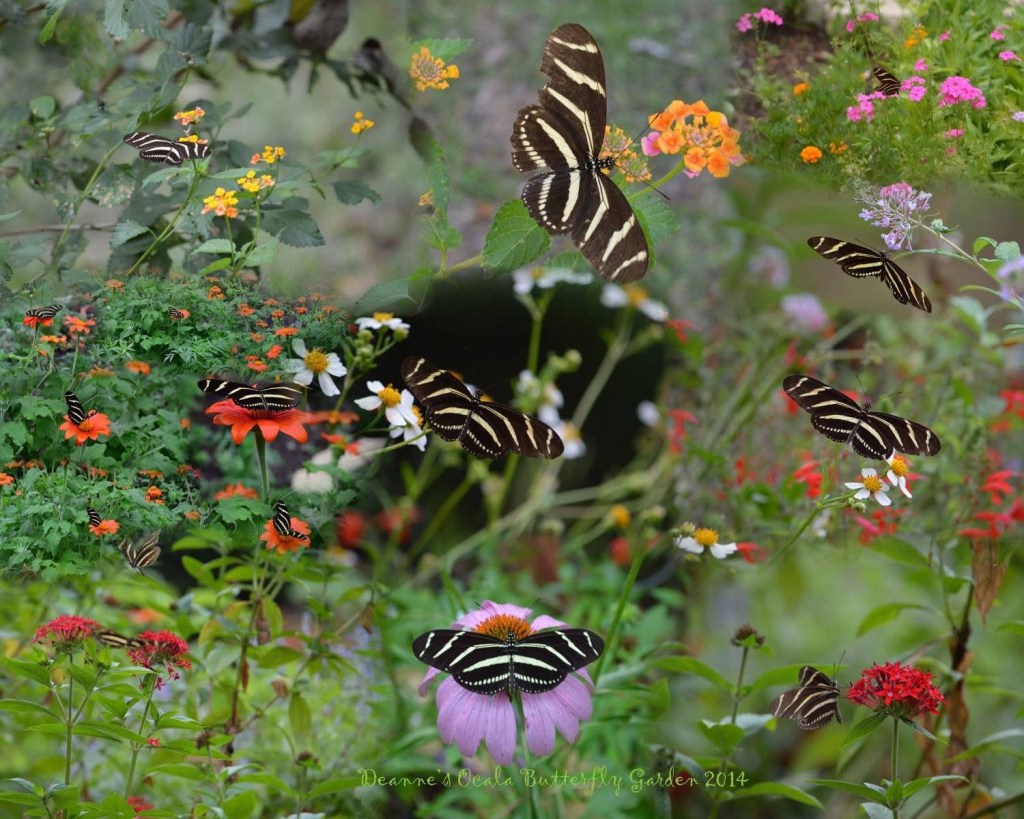
This site is a photographic journal and blog to illustrate the habitat I have created for pollinators. Included in this journal are the butterflies and their larvae (caterpillars), the nectar flowers and larval host plants required for their life cycle, and many of the other pollinators; bees, hummingbirds and other insects.
My primary goal is to share the beauty of nature at the Butterfly Dunes, and to enlighten those interested in pollinator gardening. In this time period on the planet where habitat destruction occurs through development and urban sprawl it is crucial that humans learn to be more responsible as the caretakers of nature. If this site reaches a few people and creates an interest or awareness of pollinator gardening, then I feel I have served a purpose for the greater good of the planet.
I am first and foremost a gardener, and photography is merely a tool to document the flora I grow and fauna I see. Although my primary focus is growing flowers and larval host plants for butterflies, I also show several species of bees and other insects that serve as pollinators. Hummingbirds and other birds also nest here and benefit from the Butterfly Dunes habitat.
The area encompassed by this little habitat is one acre with very thin sandy top soil. Organic amendments are essential here and I have to work continually to add the needed soil nutrients to obtain blooming flower nectar.
The habitat is surrounded by a small wooded area on the edge of town and straddles zone 9a-9b. Several butterfly species depend on the dwindling native trees, grasses, and beneficial weeds to support their larvae.
This part of Florida is considered semi-tropical, with a short dry winter-spring and a long hot summer-fall. Rainy season begins in late spring early summer. Many years experience a longer hotter dry period and I have learned to grow many more heat tolerant flower species, to cut down watering and so that my garden is successful, even during the hottest times. When rainey season begins in June or July, I always feel great relief and so does the habitat.
Over the years, as larval host plants multiply, several colonies of butterflies have established themselves and grown in the butterfly dunes. Since there is already a great deal of scientific knowledge already written in the area of Lepidoptera, I have chosen only to present my observations using the Science already established to guide my journal. I have raised and released several different butterflies species you will see from egg to butterfly, but only engaged in butterfly raising on an extremely limited basis as an exercise to understand and observe the cycle for each species. I also firmly believe in allowing nature rule nature. Even the pesky stinging bugs, such as fire ants, wasps, hornets, and mosquitoes, etc. have a role to play.
I have also visited several other regions in points North to observe Monarch butterfly migration patterns as well as the other native butterfly habitats. The Blue Ridge Parkway in North Carolina is worth honorable mention. After spending four summer seasons on the Blue Ridge Parkway observing the wildflowers and pollinators in a wild habitat, I was inspired to transform my cottage style gardening into a habitat with far more natives and far less sensitive ornamentals that require too much watering. I reduce mowing to paths and let native beneficial weeds and plants grow to serve various inhabitants.
I will often post old and new photos and videos to show the habitat. The Butterfly Dunes also exists as a Meta “page” with the same name. All photographs and videos are my own, unless otherwise documented. Free to share or comment, but above all, enjoy the beauty I bring to you. Thank you for viewing.

