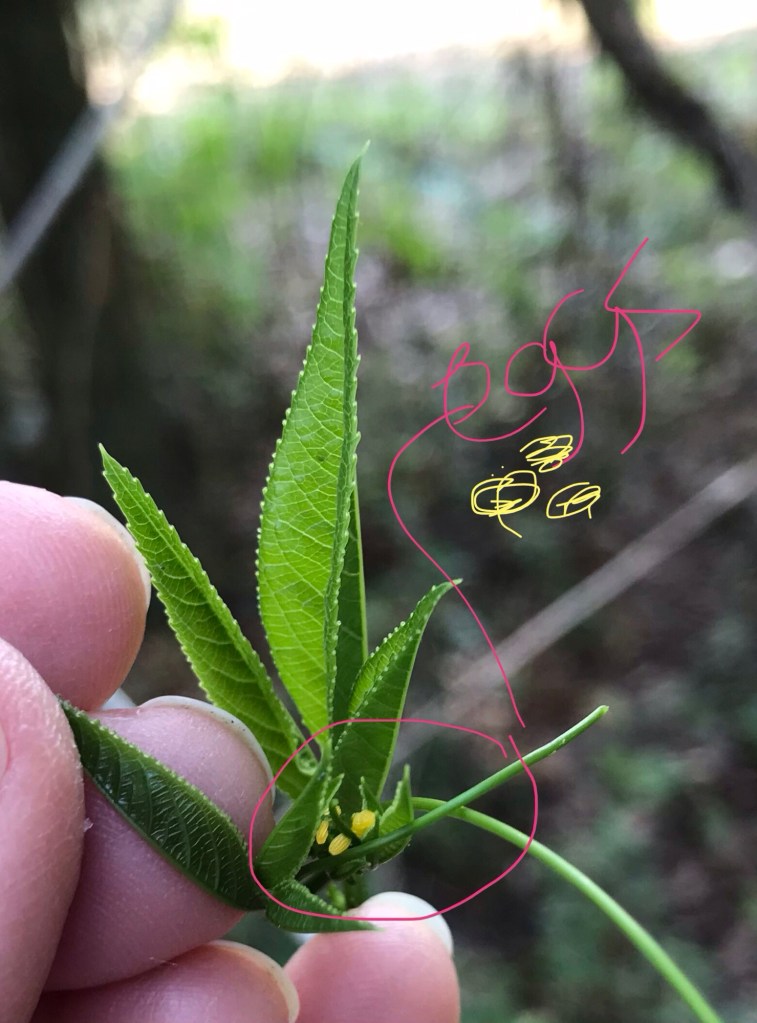
After several years of very few Pipevine Swallowtails at the Butterfly Dunes, several started showingup this year once the rainy season started in July. Since they do not consume the tropical non-native host plant (Aristolochia trilobata) I provide, I went on a mission to find the native Aristolochia serpentaria vine near my property, since my research suggests this is a main food source. I was rewarded in my search.
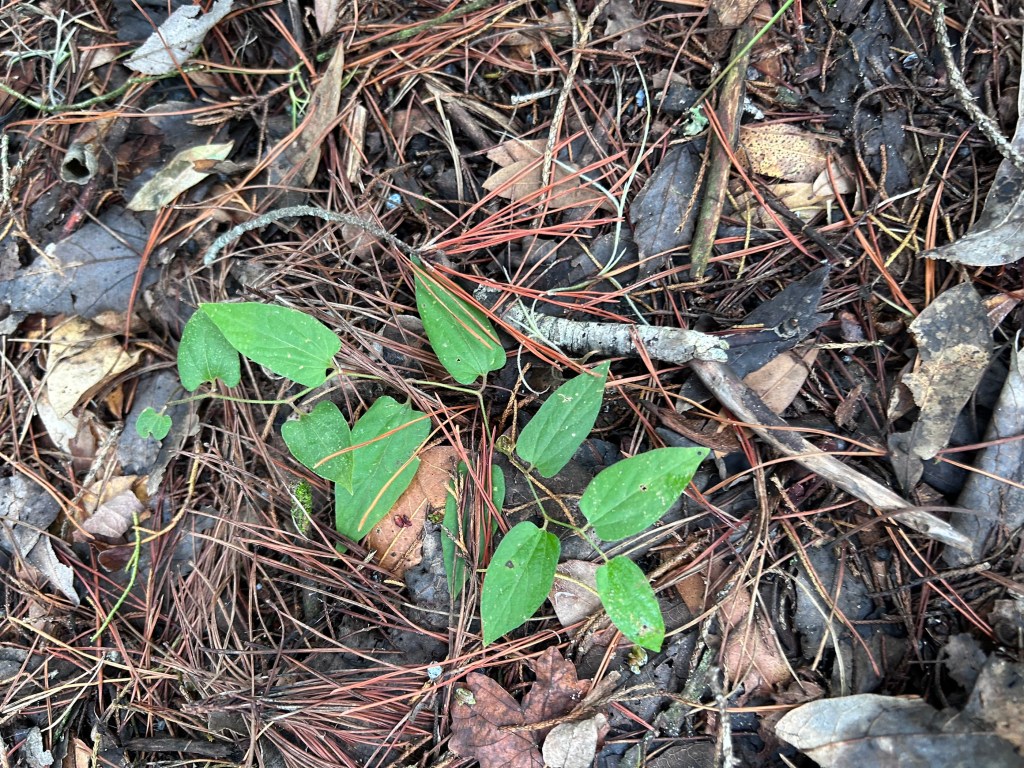
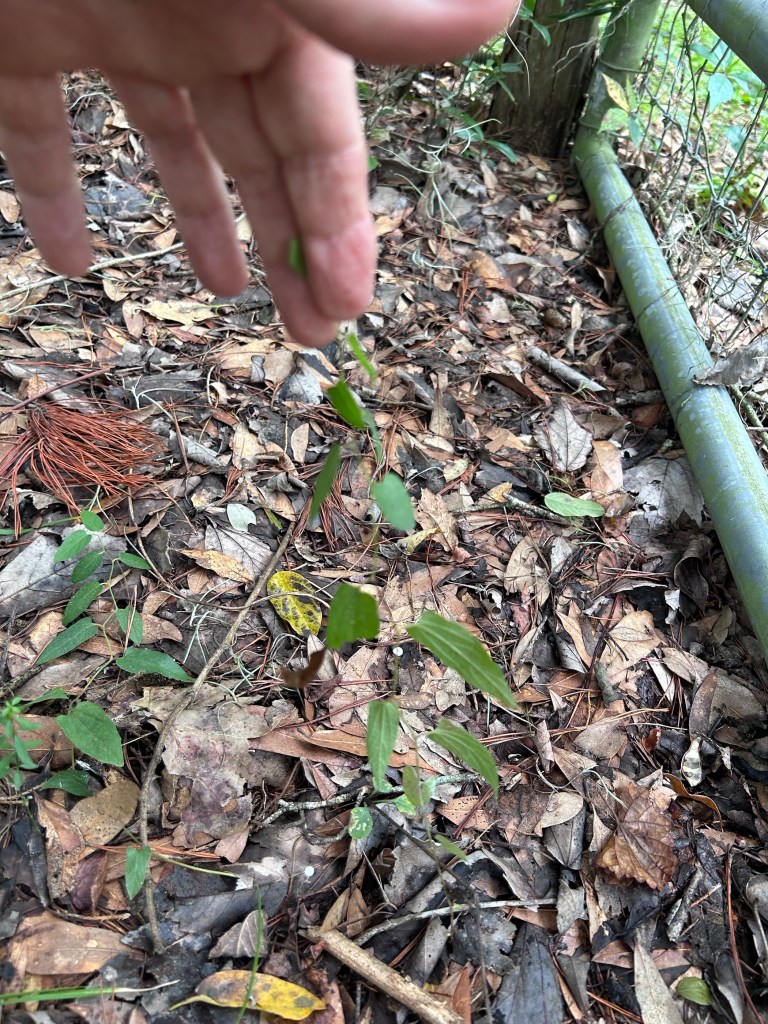
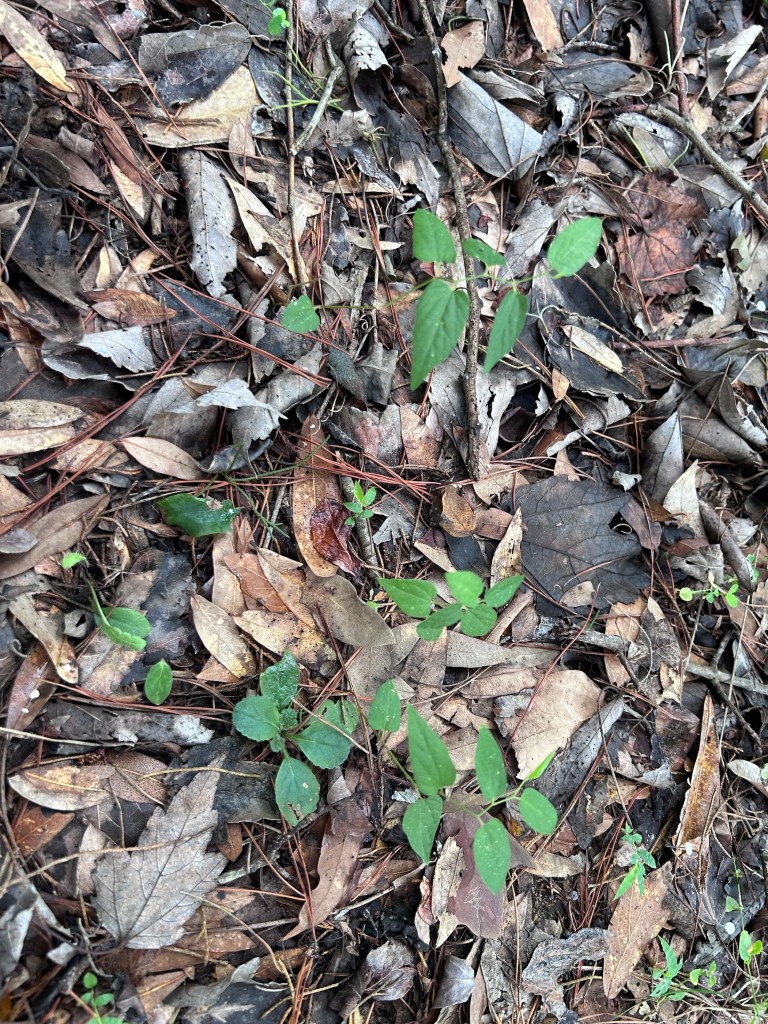
This native vine, A. serpentaria, aka Virginia Snakeroot is one of its primary host plants here in Central FL. It grows in very shaded areas and so far I’ve found one deeply shaded unmowed corner on the property under cedar and trees. There are about 10 small vines (about 6-8 inshes long) in this little corner. Going to continue to search the wooded areas for more host plants. Will attempt to harvest a few vines before frost and collect seeds in October.
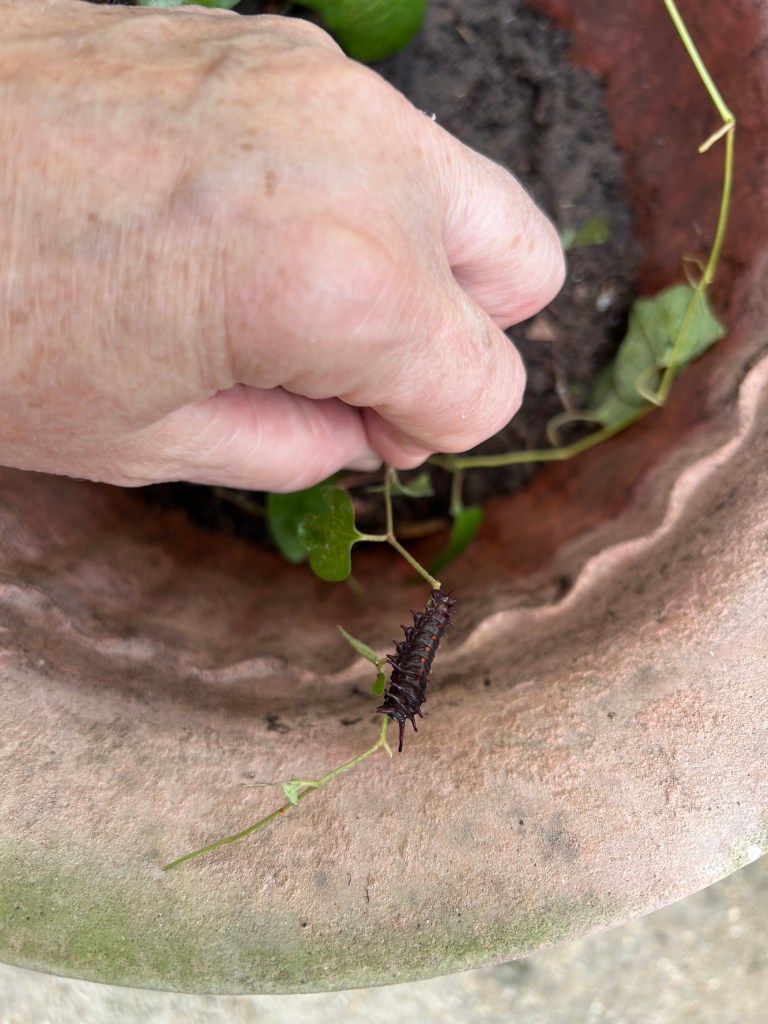
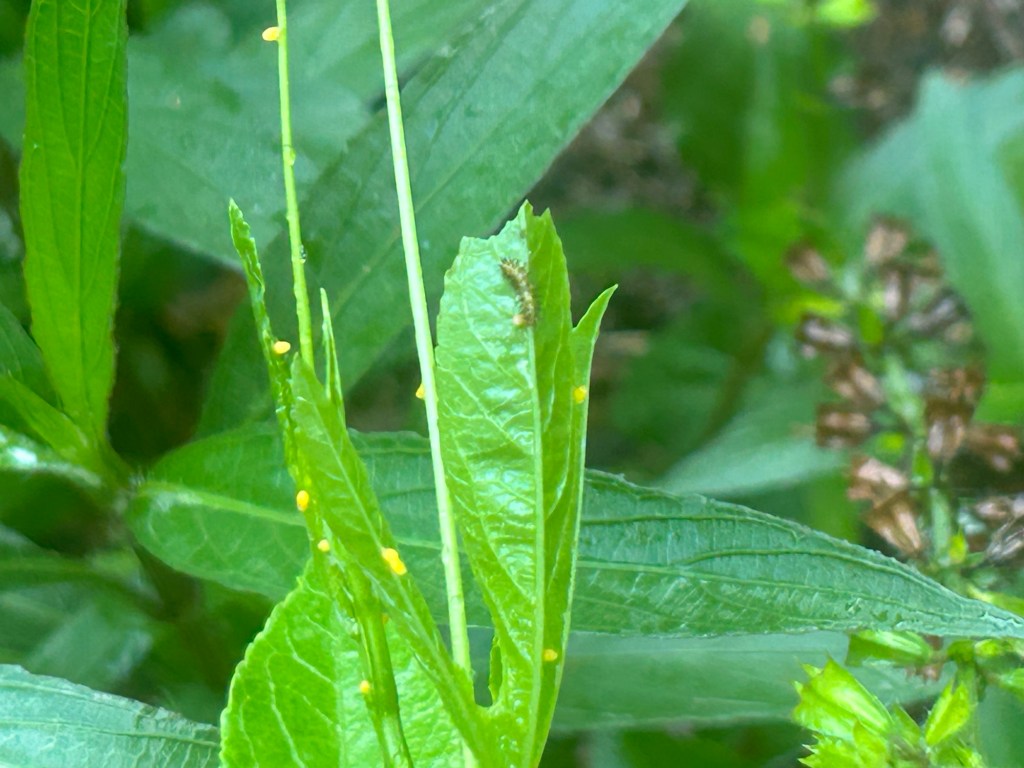
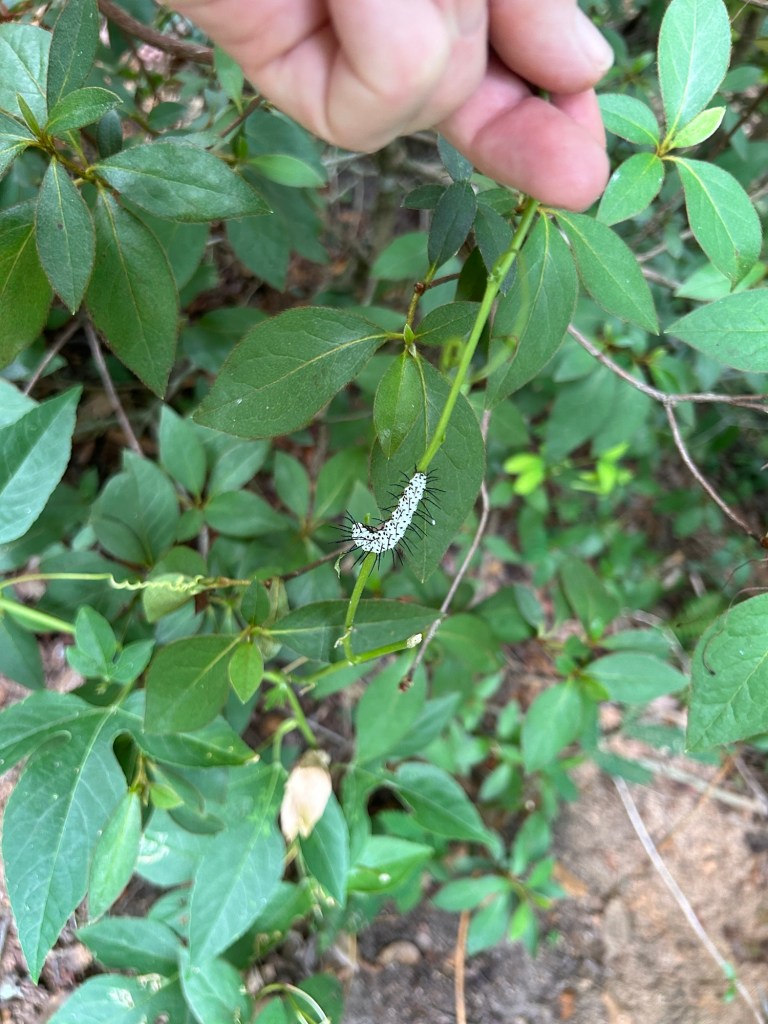
I found one caterpillar and dug up this plant and one more to feed him.
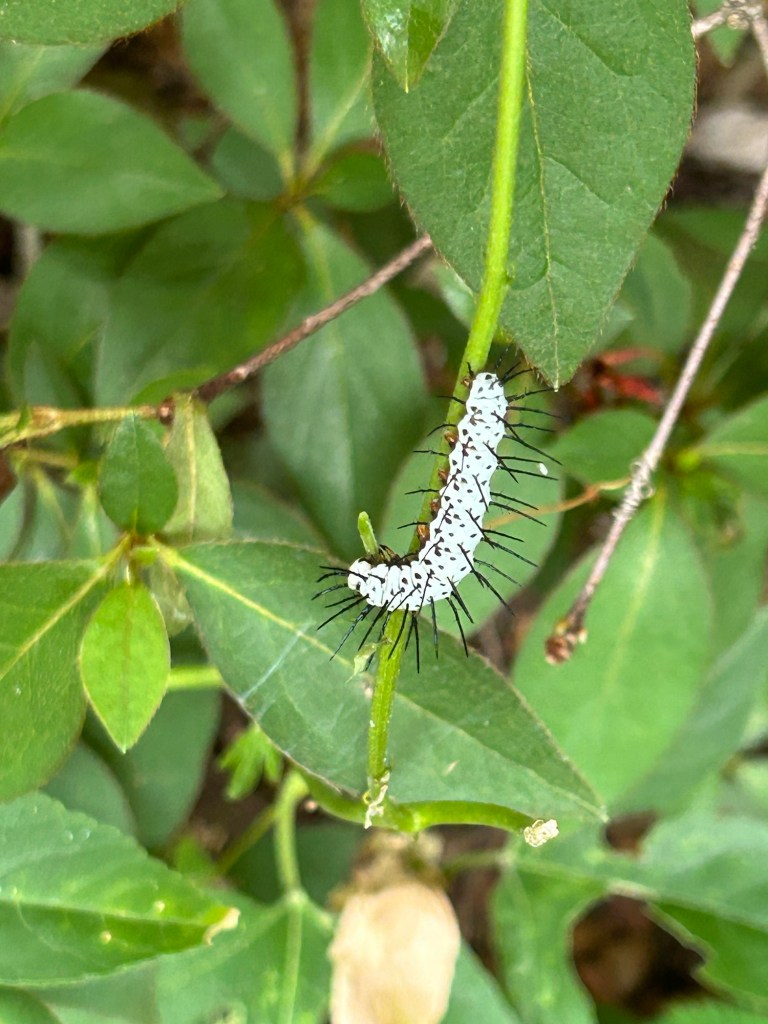
Pipevine caterpillar on Aristolochia serpentaria. He ate two vines before pupating.
“The caterpillar does all the work, but the butterfly gets all the publicity.” –George Carlin
The monarch butterfly is one of the most familiar of North American butterflies. This amazing creature is famous for its annual migration pattern on both the East and West sides of the North American Rocky Mountains. Migration patterns have been studied for years and received much attention due to dwindling populations due to habitat loss from deforestation and logging, as well as agricultural practices and urban sprawl across its summer breeding grounds and overwintering locations. There have been many books and internet sites that delve into much more detail of the monarch. Listed at the bottom of this post are worthy internet sites to read more about them.
Monarch caterpillars require the host plant, Asclepius, which is a genus of herbaceous, perennial, flowering plants known as milkweed. There are many varieties of milkweed, depending on the region.
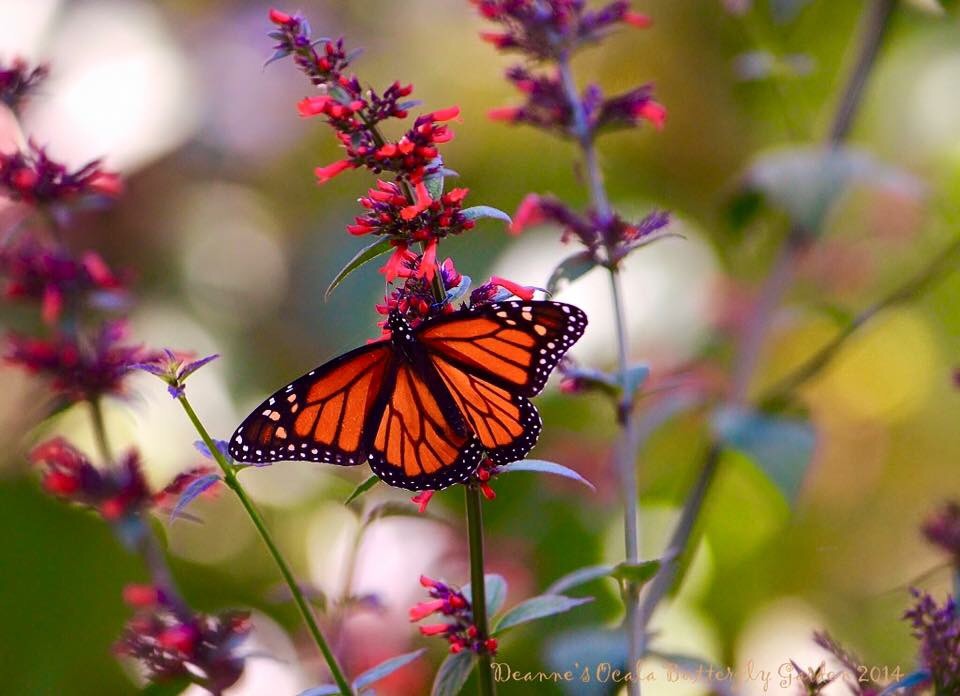
At the butterfly dunes habitat, here in Central Florida, Monarch butterflies live here most of the year. It’s possible that some migrate North in the spring and in the fall, the habitat receives some migrants flying south. Scientists suggest that many butterflies overwinter in Florida, and this has been observed at the Butterfly Dunes.
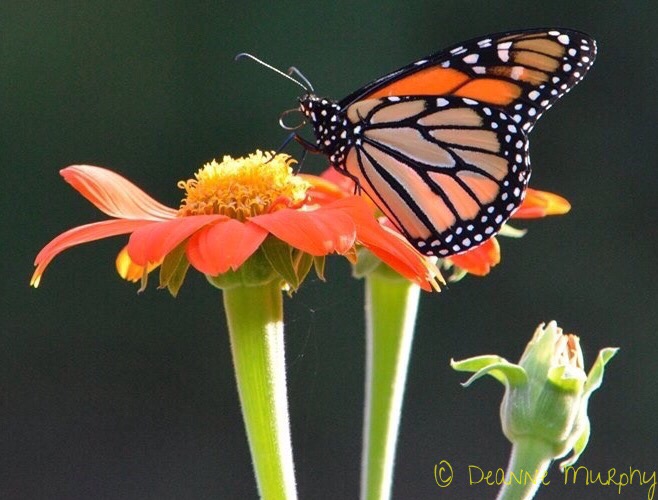
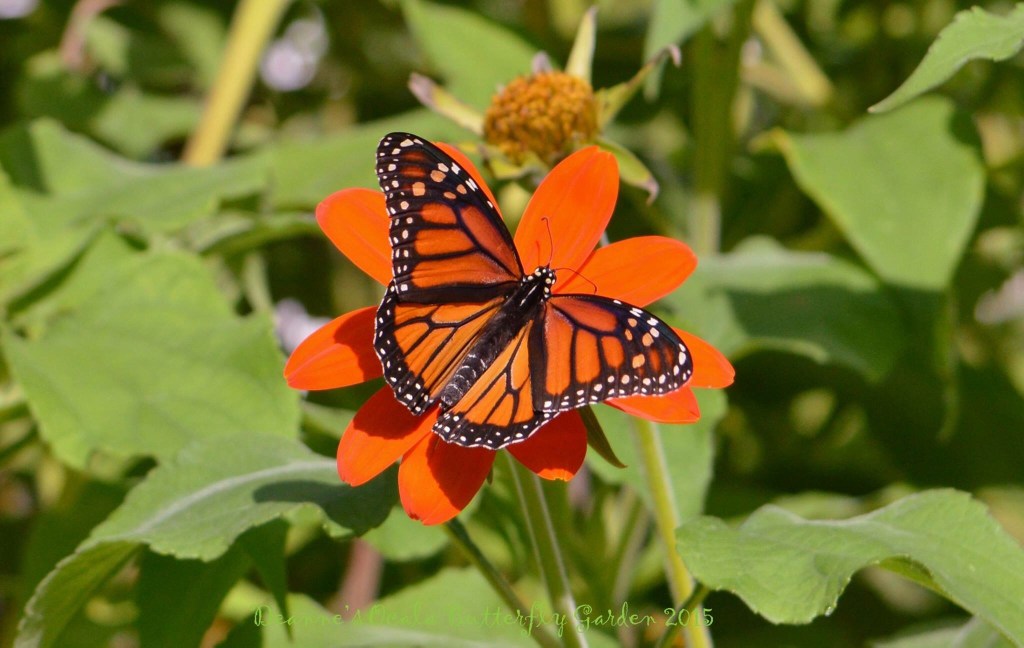
Monarch on Tithonia, also called Mexican Sunflower. This flower re-seeds itself continually through-out the growing season.
Monarch on Firecracker plant, Russelia sarmentosa.
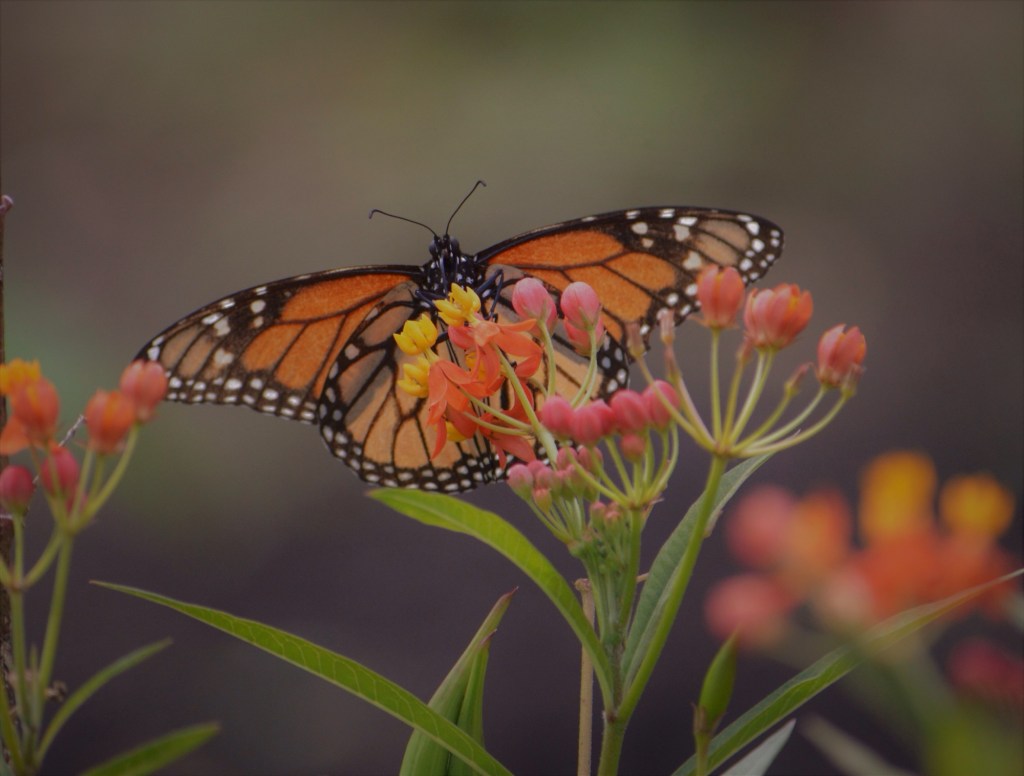
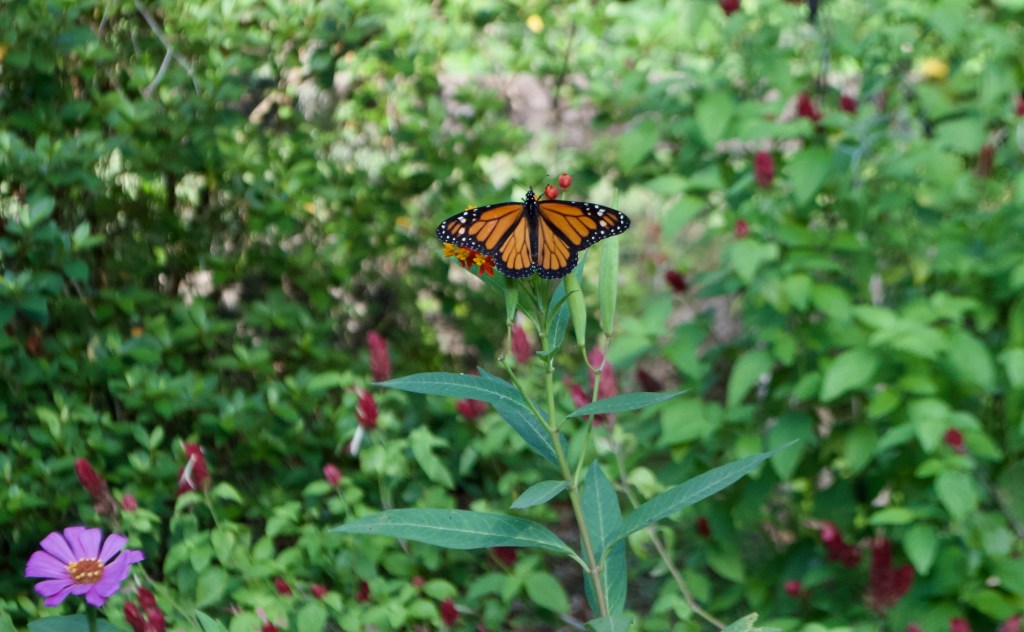
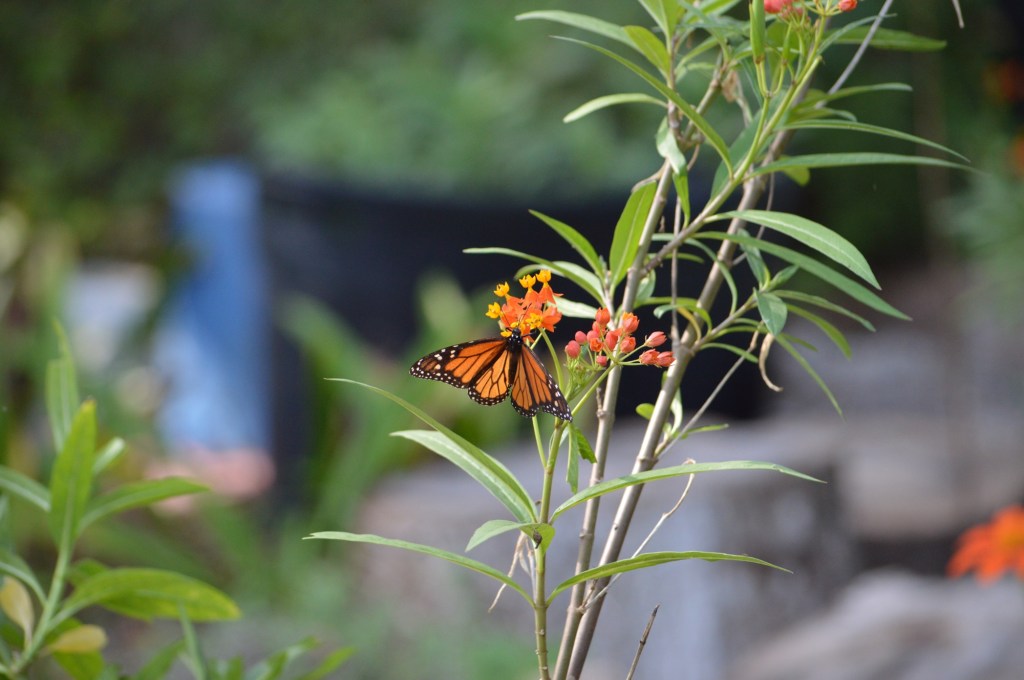
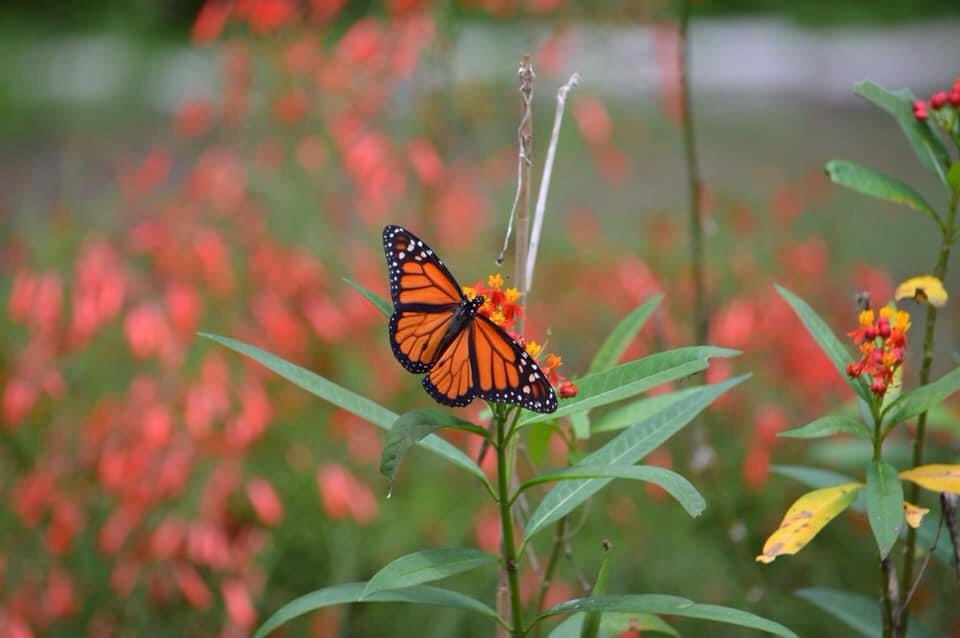
Monarch using nectar from tropical milkweed.
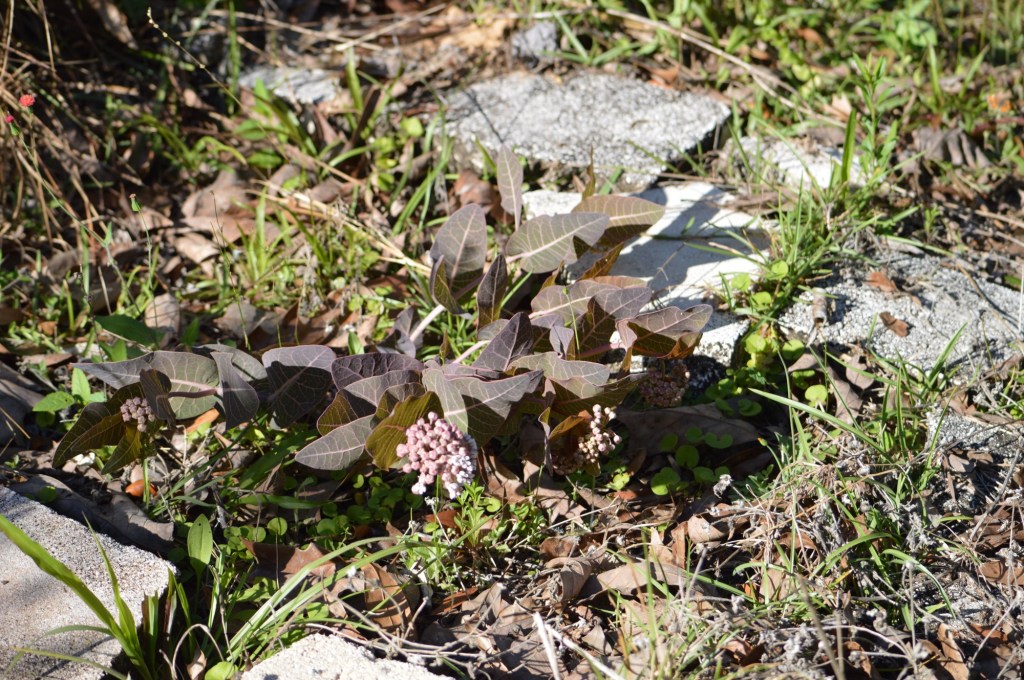
Monarch larval host plants
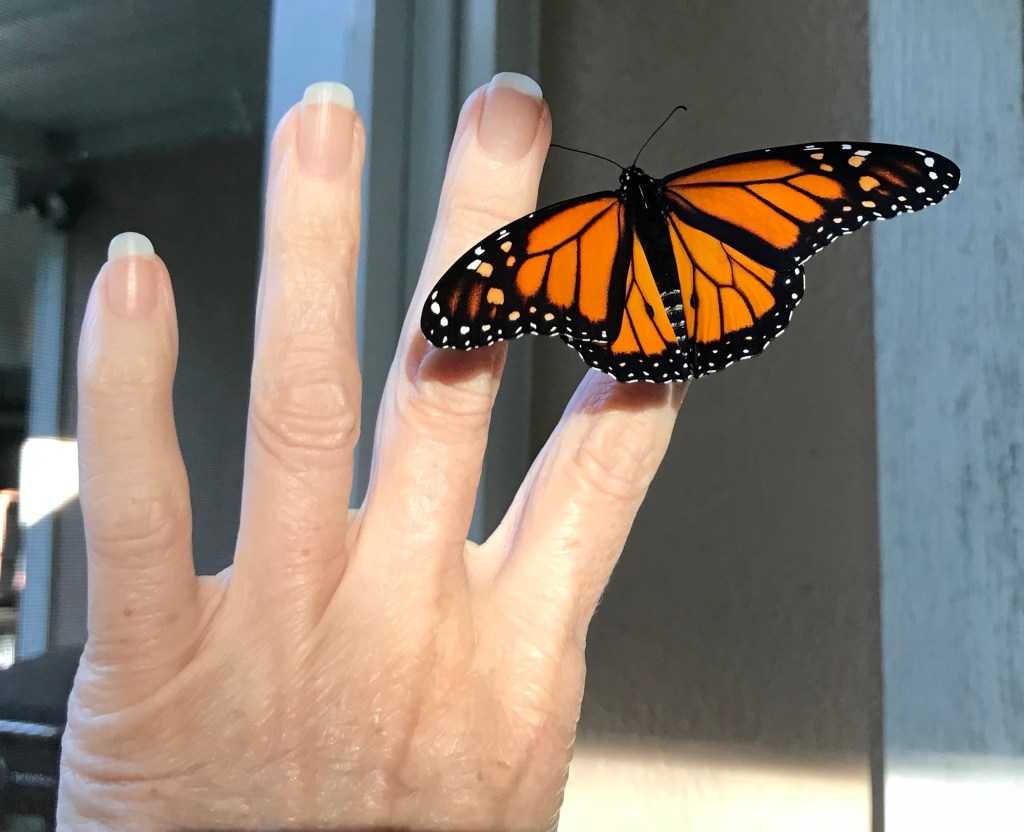
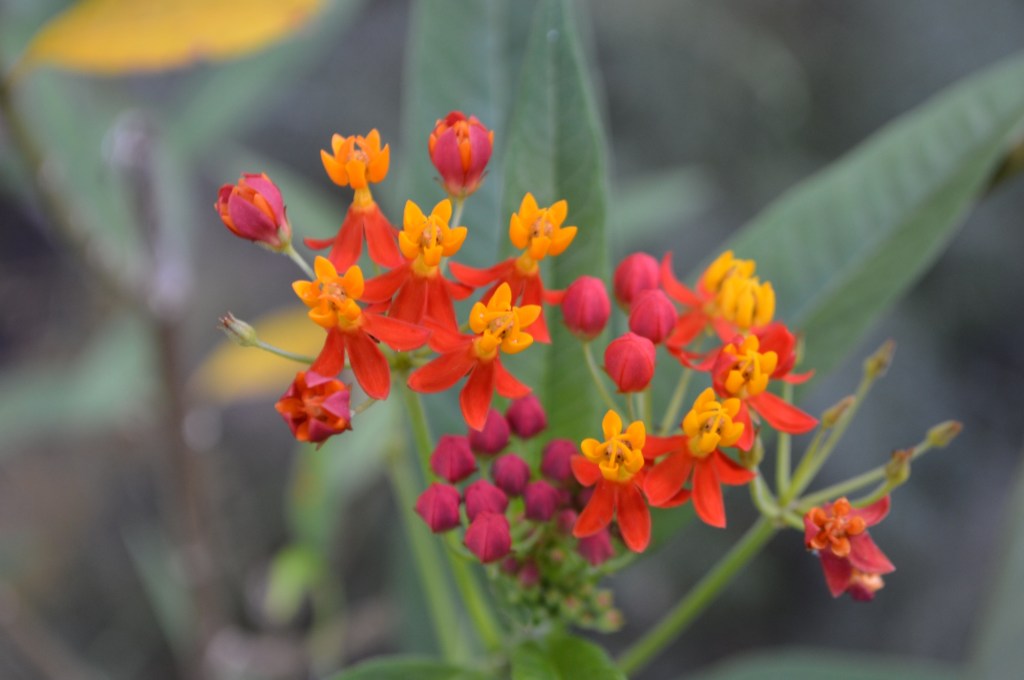
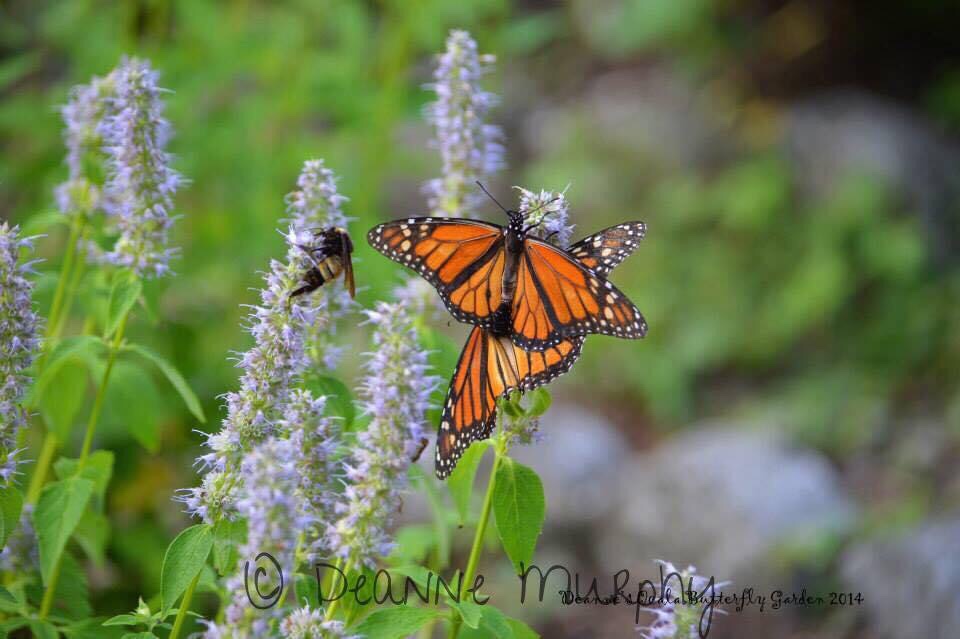
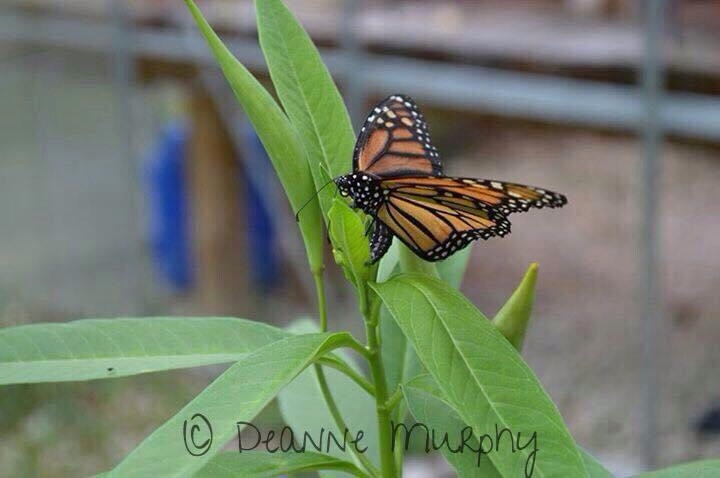
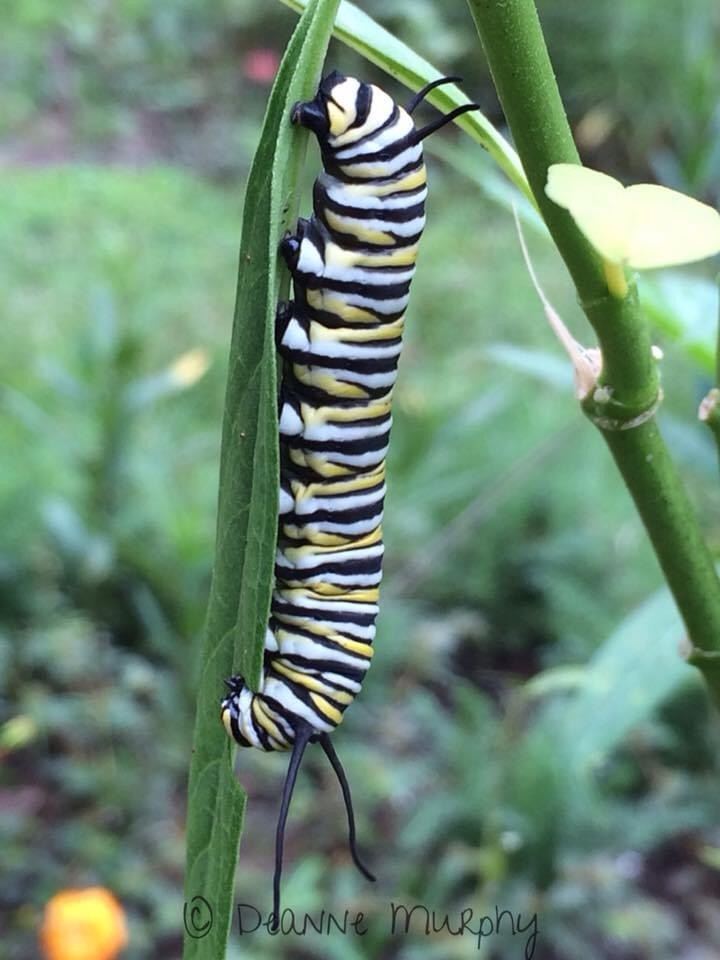
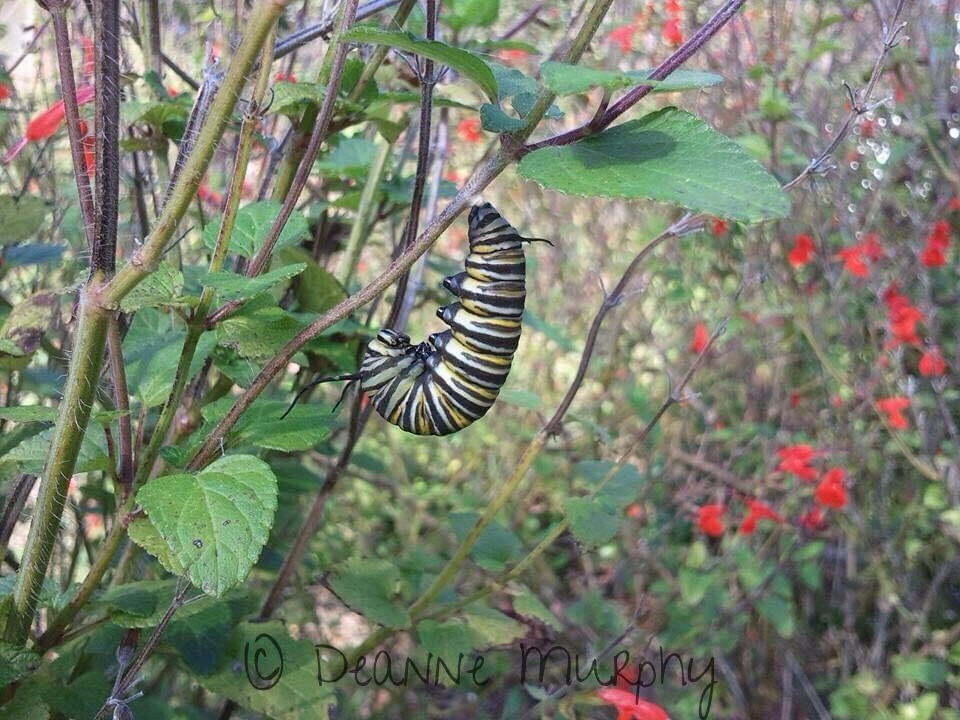
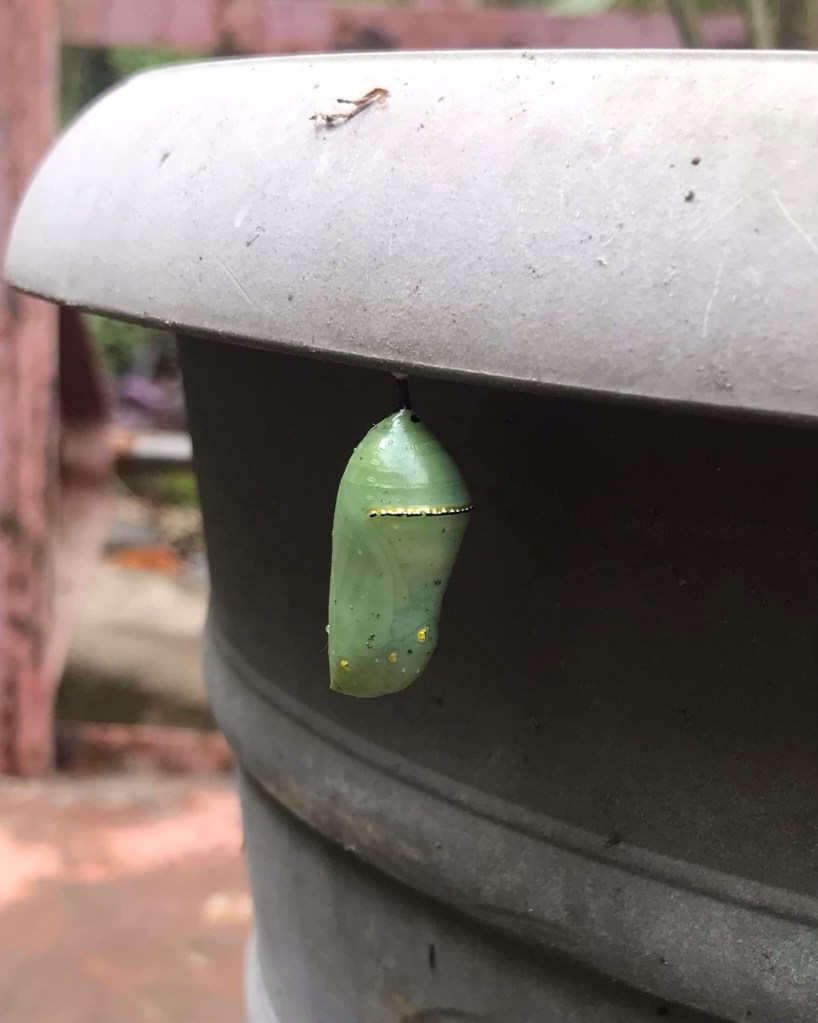
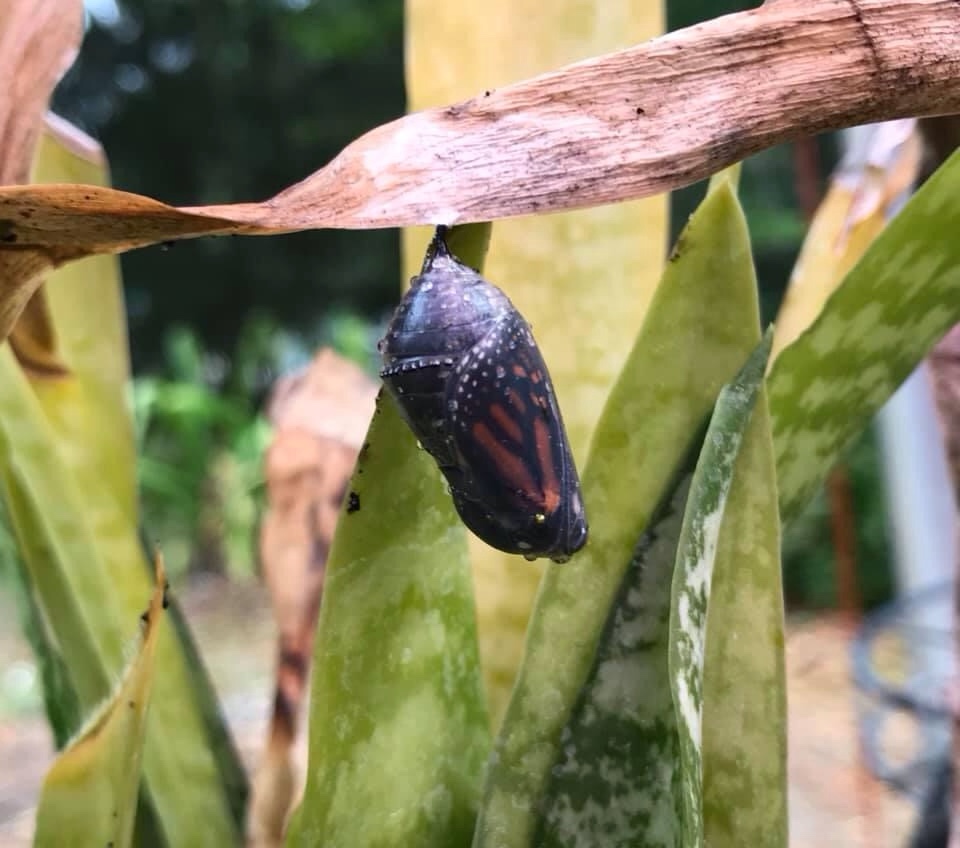
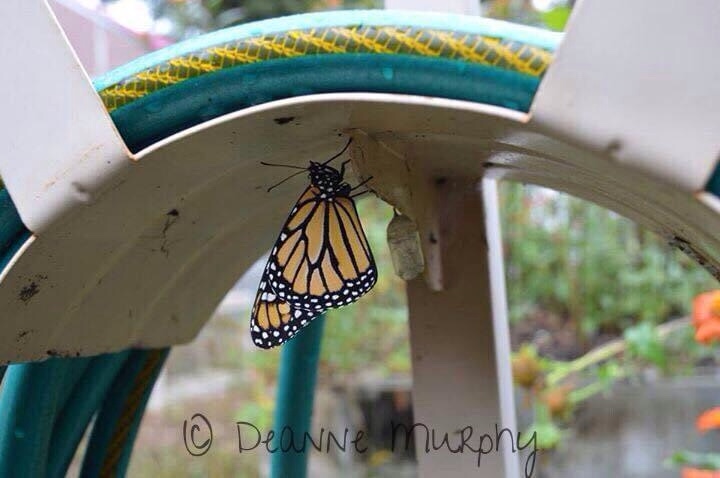
native milkweed, Asclepius humistrta Tropical milkweed, Asclepius currisavicaTropical milkweed bloom, Asclepius currisavicaMonarchs matingMonarch female ovipositing (laying eggs) on tropical milkweedLast stage, 5th instar Monarch caterpillar Monarch caterpillar forming a J and preparing to pupate into a chrysalis. This stage to butterfly takes about two weeks.Monarch chrysalisThe butterfly becomes visible in its chrysalis a day or two prior to eclosing (emerging).Butterfly has eclosed and is still hanging onto the shell of its chrysalis. It takes a few hours of drying before flying.Male Monarch. The two black oval spots just above the bottom of the lower set of wings distinguish the male from the female.